

What Is the Difference Between OCD and OCPD, and How Are They Treated?
Key clinical distinctions, areas of overlap, and treatment approaches
Obsessive-compulsive disorder (OCD) and obsessive-compulsive personality disorder (OCPD) have similar names, but they differ substantially in their core symptoms, how those symptoms are experienced, and their treatment.
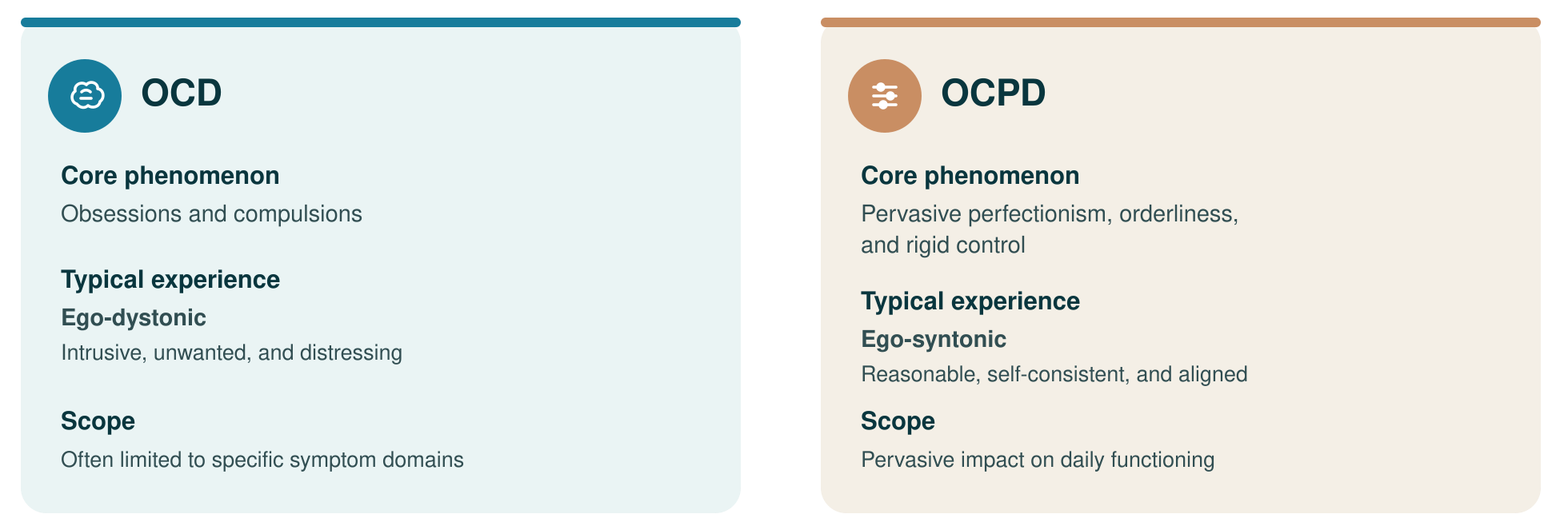
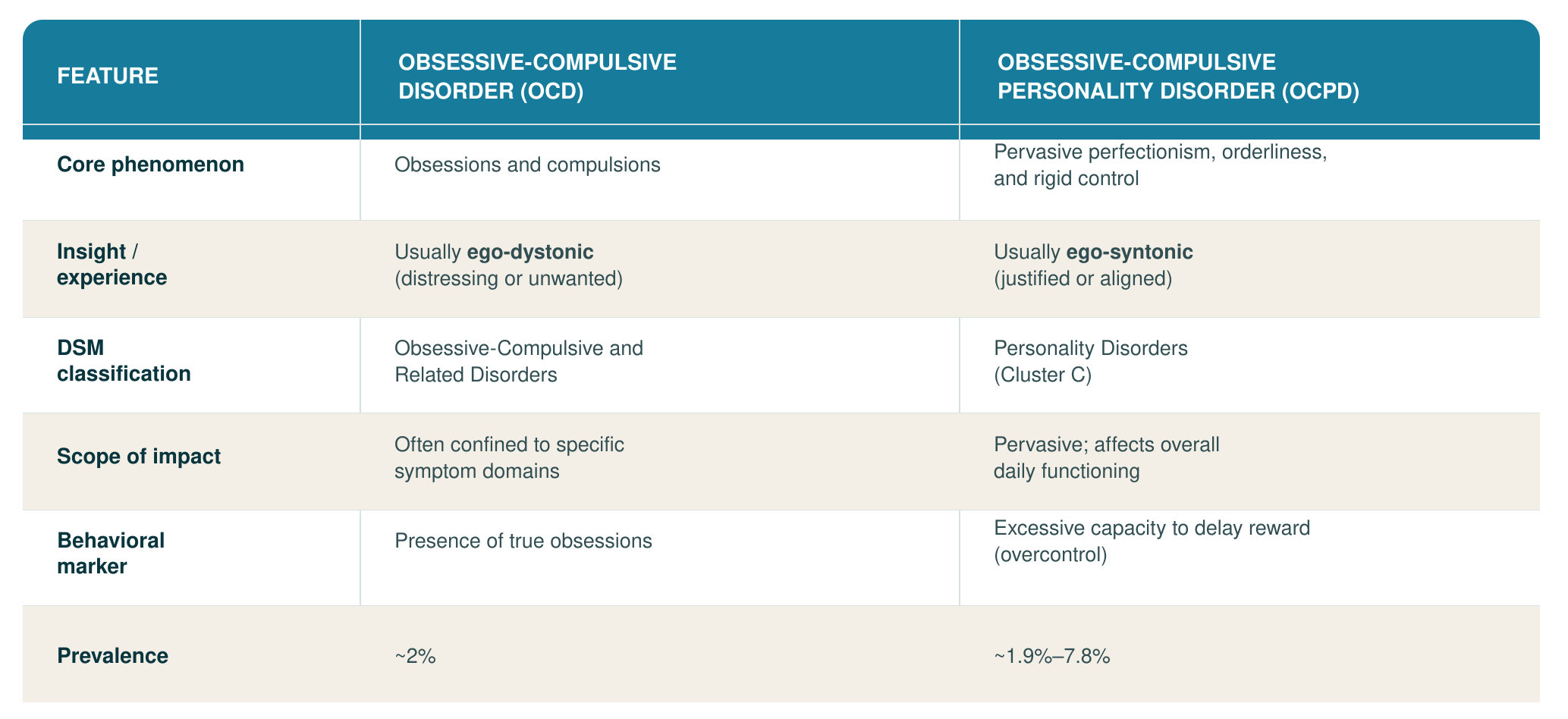
The DSM-5-TR distinguishes OCD from OCPD primarily by the presence of true obsessions and compulsions in OCD. OCPD is instead characterized by a pervasive pattern of perfectionism, orderliness, and rigid control that can reduce flexibility and efficiency.
The diagnoses are not mutually exclusive. When a person meets the criteria for both conditions, both diagnoses should be recorded.
What Defines OCD and OCPD?
OCD involves intrusive and unwanted thoughts, images, or urges known as obsessions. It also involves repetitive behaviors or mental acts, known as compulsions, that are performed to reduce distress or prevent a feared outcome.
OCPD involves an enduring and pervasive pattern of excessive perfectionism, orderliness, and rigid mental and interpersonal control.
What Is the Core Difference Between OCD and OCPD?
How Do OCD and OCPD Compare Clinically?
Can OCD and OCPD Occur Together?
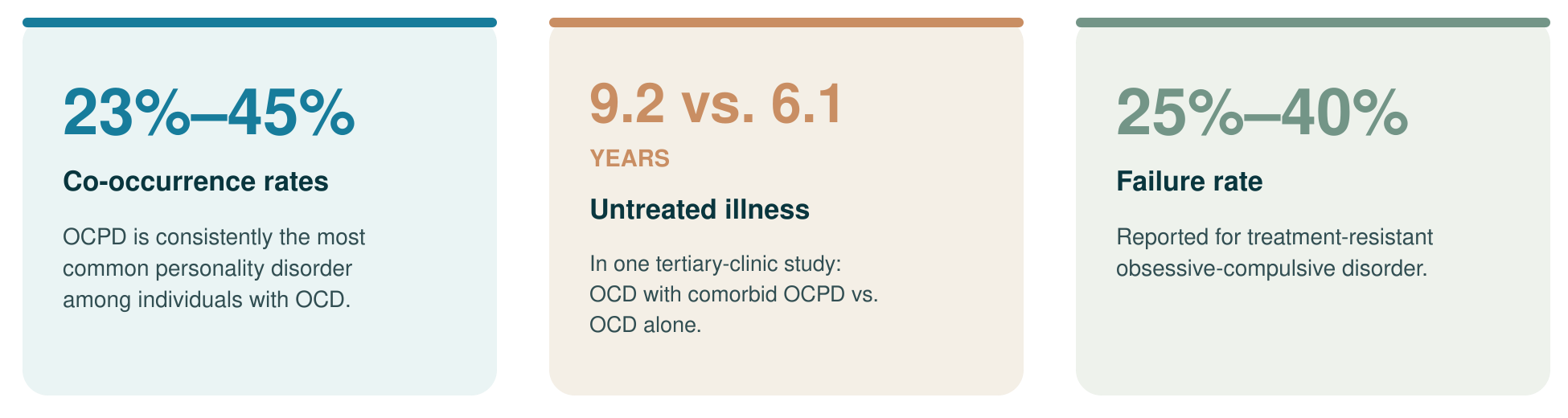
OOCD and OCPD can occur together, with reported co-occurrence rates of 23% to 45%. Shared features may include symmetry or hoarding concerns, ordering behaviors, rigidity, and excessive self-control.
However, pure obsessions and contamination or cleaning symptoms are more characteristic of OCD, while OCPD is more strongly associated with psychological overcontrol and an excessive ability to delay rewards.
When both conditions are present, patients may experience an earlier onset, a more chronic course, more symptoms, greater depression severity, and increased symmetry, ordering, or hoarding symptoms.
How Are OCD and OCPD Treated?
Treatment differs between the two conditions. OCD has established psychological and pharmacological treatments, while OCPD is treated primarily with psychotherapy.
First-Line Treatment for OCD
Cognitive behavioral therapy with exposure and response prevention (CBT with ERP) is a first-line treatment for OCD and has demonstrated large treatment effects. ERP gradually exposes patients to feared situations while helping them resist compulsive behaviors.
Medication options include SSRIs such as fluoxetine, fluvoxamine, sertraline, paroxetine, citalopram, and escitalopram. Clomipramine may also be used. Treatment response is generally assessed after 8 to 12 weeks, and medication is typically continued for at least 6 to 12 months after improvement.
Citalopram and clomipramine require additional safety considerations because of potential cardiac, seizure, and medication-level risks.
Treatment-Resistant OCD
Approximately 25% to 40% of patients do not respond adequately to initial treatment. Options may include adding an antipsychotic to an SRI, clomipramine, glutamate-modulating medications, or repetitive transcranial magnetic stimulation.
Deep brain stimulation or stereotactic capsulotomy may be considered in rare, highly refractory cases.
Treatment for OCPD
Psychotherapy is the primary treatment for OCPD, although clinical trial evidence remains limited. There is currently no FDA-approved medication specifically for OCPD.
References
Girone, N., Bucca, C., Benatti, B., Giorgetti, F., Celebre, L., & Altamura, A. C. (2026). Is comorbid obsessive-compulsive personality disorder responsible for a longer duration of untreated illness in obsessive-compulsive disorder? Journal of Psychiatric Research, 182, 115–121.
Żerdziński, M., Burdzik, M., Dębski, P., Krupka-Matuszczyk, I., & Janas-Kozik, M. (2025). The impact of obsessive-compulsive personality disorder on obsessive-compulsive disorder: Clinical outcomes in the context of bipolarity. Journal of Affective Disorders, 371, 210–218.
