
Weighing the risks and benefits of gabapentin for cannabis use in older adults
Current evidence, potential benefits, safety risks, and clinical considerations
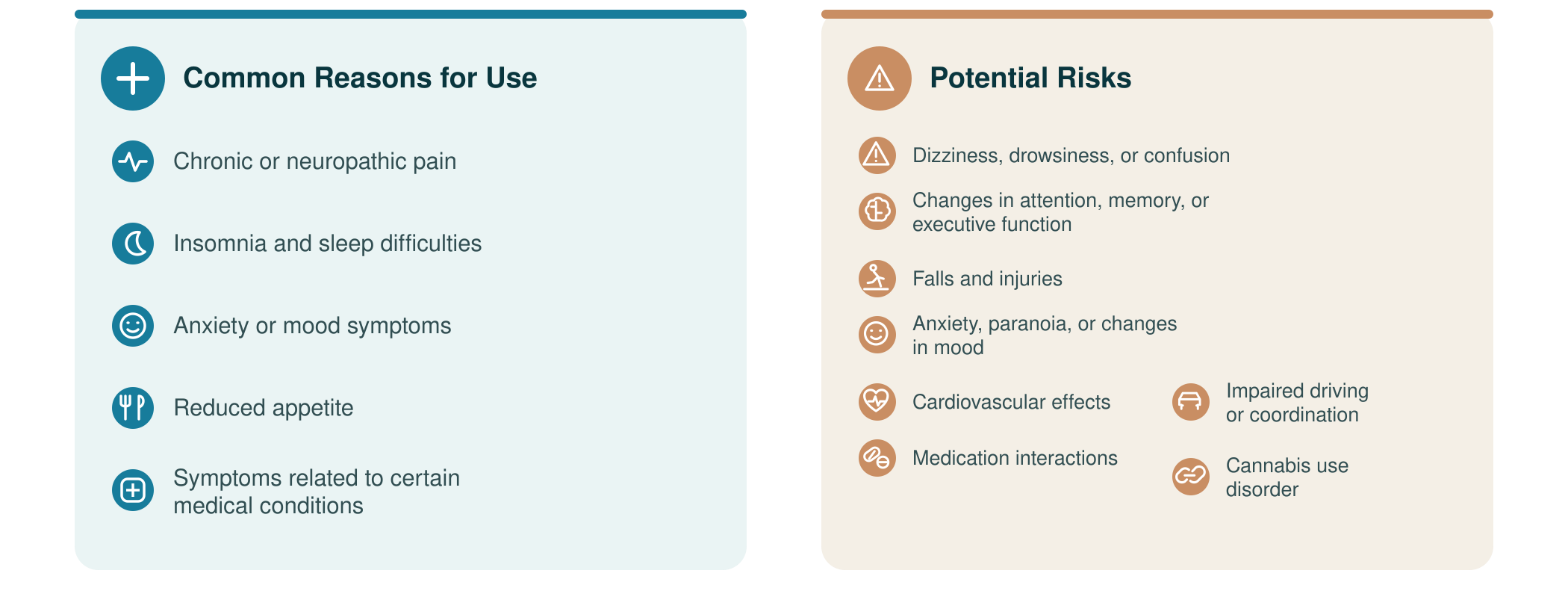
Cannabis use among older adults has increased, particularly among individuals seeking relief from chronic pain, sleep difficulties, anxiety, or mood symptoms. However, regular cannabis use may also contribute to sedation, cognitive changes, falls, cardiovascular complications, medication interactions, and cannabis use disorder.
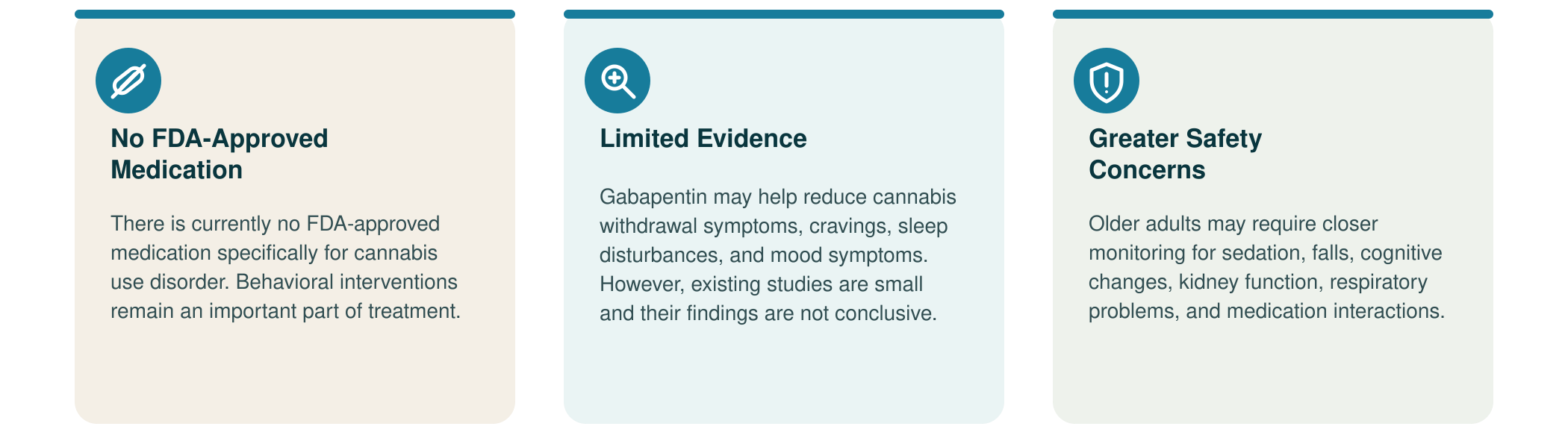
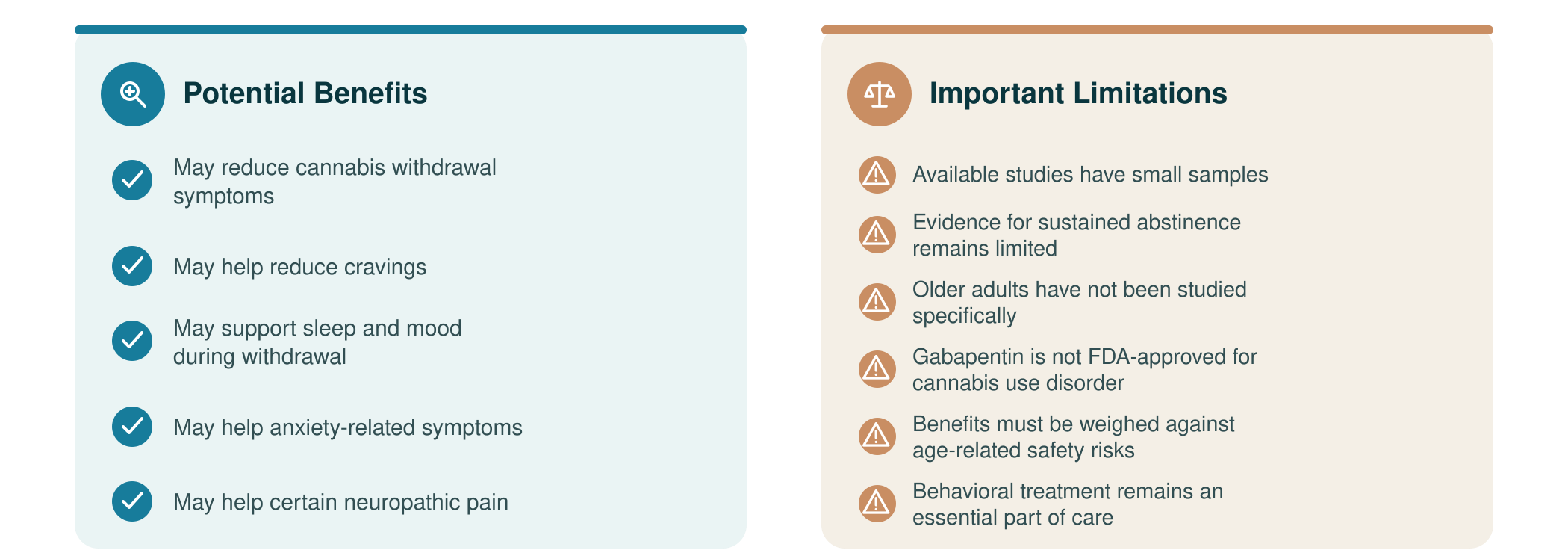
Gabapentin has been studied as a possible treatment for cannabis withdrawal and cravings. Although early research has shown some promising results, the evidence remains limited, and its effectiveness has not been established specifically in older adults.
Key Takeaways
Cannabis Use in Older Adults
Common reasons for use and potential clinical risks
What Does the Evidence Say About Gabapentin?
Gabapentin is an FDA-approved medication for certain seizure disorders and some forms of nerve pain. Its use for cannabis use disorder is considered off-label.
A small randomized clinical trial involving adults found that gabapentin was associated with reductions in cannabis use, withdrawal symptoms, and cravings. Participants also reported improvements in sleep, mood, and executive function. However, the study included only 50 participants between the ages of 18 and 65 and had a limited completion rate. It did not focus specifically on older adults.
Safety Considerations for Older Adults
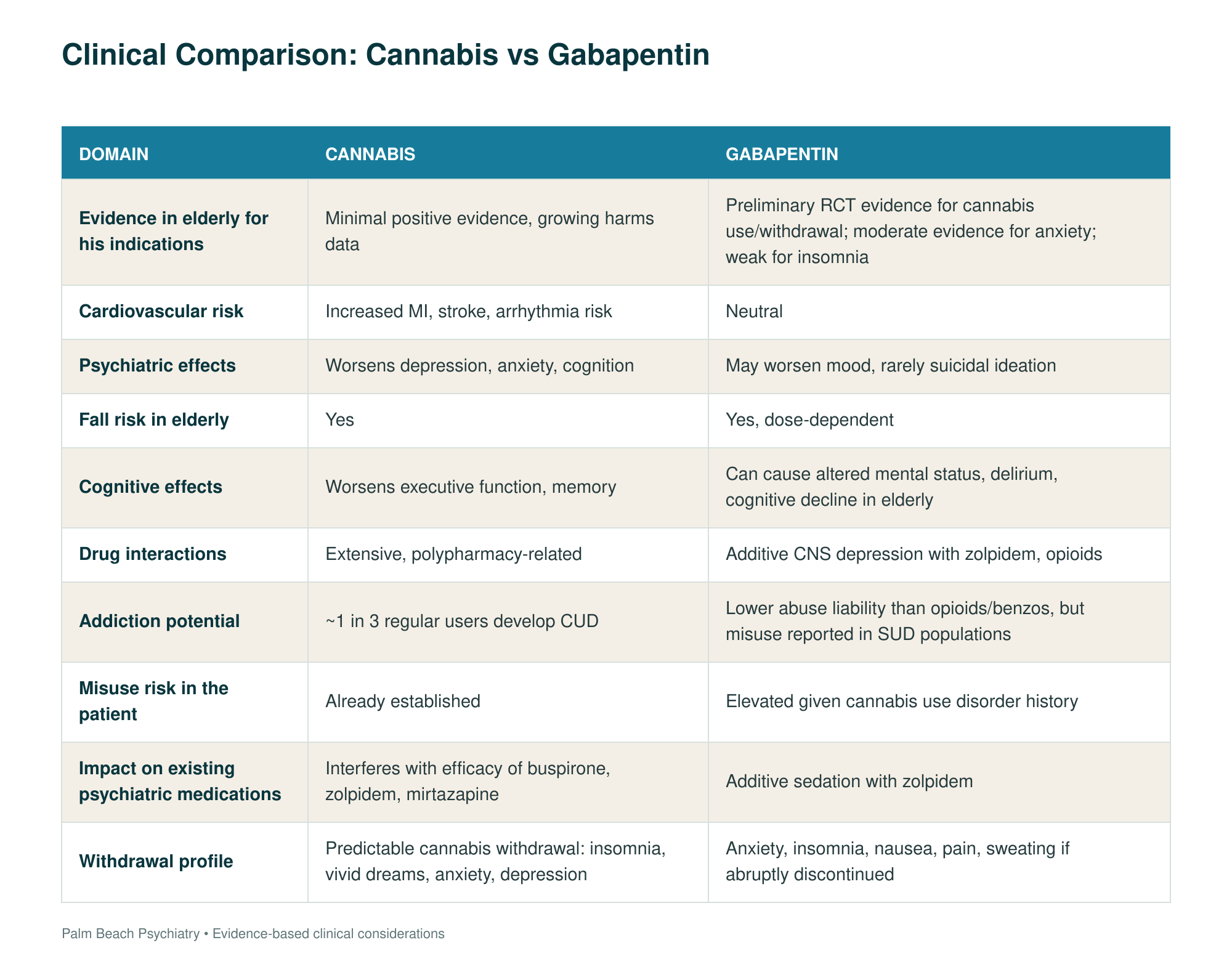
Gabapentin may cause dizziness, drowsiness, impaired coordination, swelling, or confusion. These effects can be more significant in older adults and may increase the risk of falls.
Because gabapentin is eliminated through the kidneys, kidney function should be considered when determining an appropriate dose. Dose adjustments may be necessary for individuals with impaired renal function.
Gabapentin may also increase sedation or respiratory risk when combined with other central nervous system depressants. The FDA notes that older adults and people using other sedating medications may face a higher risk of serious breathing problems.
Clinical monitoring may include:
Sedation and daytime alertness
Balance, gait, and fall risk
Memory, attention, and confusion
Kidney function
Respiratory symptoms
Concurrent medications and substances
Signs of misuse or unapproved dose escalation
Changes in anxiety, depression, or suicidal thoughts
What Treatments Are Available for Cannabis Use Disorder?
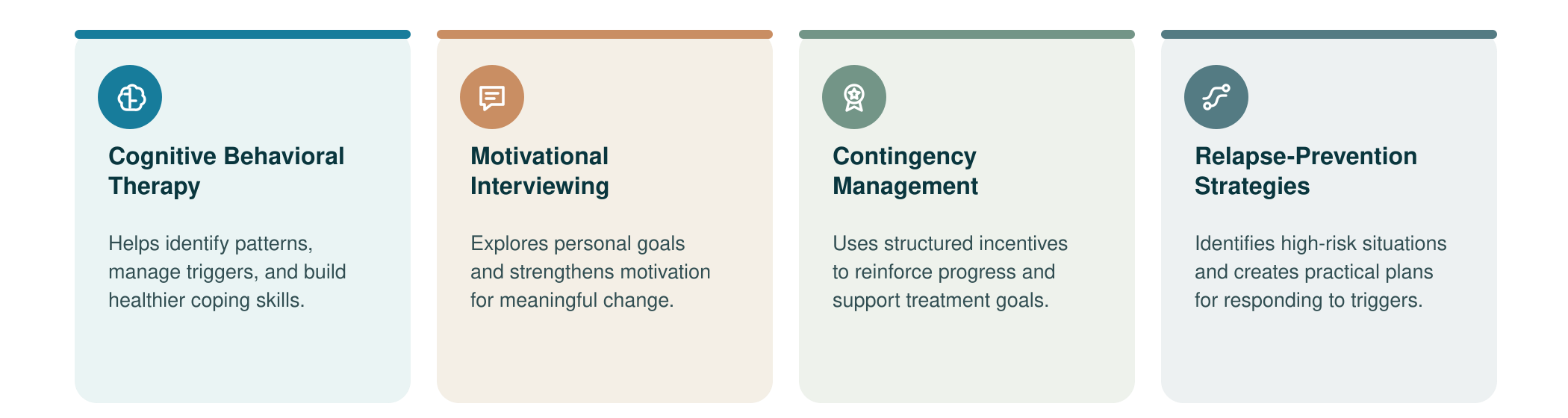
There is currently no FDA-approved medication specifically for cannabis use disorder. Behavioral treatments remain central to care and may include:
When Is Immediate Medical Evaluation Necessary?
Prompt medical evaluation may be necessary if cannabis or medication use is followed by:
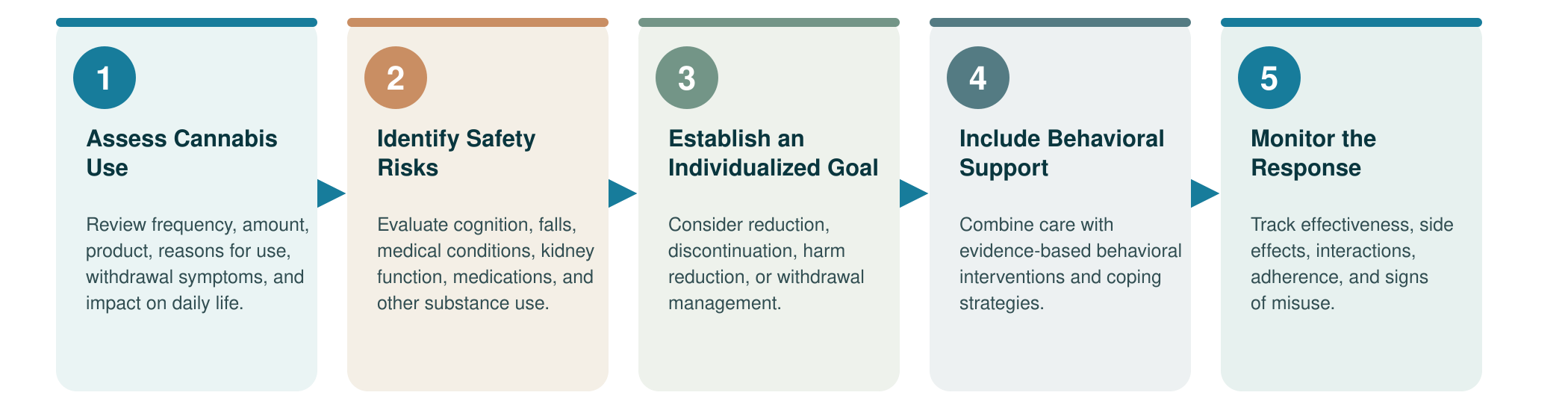
Gabapentin may help some adults manage cannabis withdrawal symptoms, cravings, sleep disturbances, or related discomfort. However, it is not an established or FDA-approved treatment for cannabis use disorder, and evidence involving older adults is especially limited.
Treatment decisions should be individualized and based on medical history, kidney function, fall risk, cognition, concurrent medications, and substance-use history. When gabapentin is considered, it should be combined with behavioral treatment and careful clinical monitoring.